
Radar versus inductive loops in the asphalt
This is how traffic detection with radar differs from inductive loops in the road surface.
Detection loops, also called inductive loops, are machined in the road surface. Installation or replacement requires a full road closure. Radar from Radarxense is mounted beside the road, without a road closure and without asphalt work. XenseFlow Loop is the direct replacement for inductive loops at traffic lights.
| Challenge | Traditional Loops | Radarxense (XenseFlow) |
|---|---|---|
| Road maintenance | Prone to breakage with rutting and frost | No asphalt work needed |
| Traffic disruption | Roadway must be closed | Mounting beside the road without a road closure |
| Weather sensitivity | Not sensitive | 100% reliable in all weather conditions |
| Privacy (GDPR) | Not applicable | Privacy by design: no identifiable personal data |
No milling in the road surface
Loops are a proven technology. However, they are machined in the road surface. They are prone to breakage with rutting and frost.
With radar, no asphalt work is needed. There is no asphalt milling and there are no repair costs during road work. This also means no more broken loops.
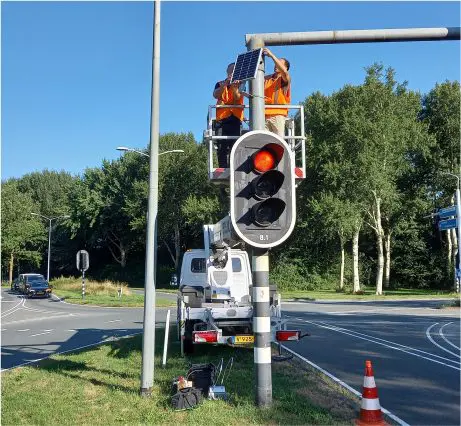
Mounting beside the road, without a road closure
To install or replace a loop, the roadway must be closed. Radar is mounted beside the road, without a road closure.
The system is easy to attach to existing poles or gantries. After that, the detection zone is configured in a short time. Radarxense is the technology partner behind the system integrator and installer. The systems are easy to cost and quickly mounted.
Detection at the traffic lights
XenseFlow Loop reliably detects stop lines, queues and approaching traffic on all lanes and bike paths. The system connects directly to the traffic light controller, locally via I/O or via a protocol.
The virtual loops are intended for traffic lights and for retrofit.
Speed and traffic data
The detection of a loop is based on a spot measurement. Speed measurements and smart data processing are therefore cumbersome and limited. For that, multiple loops in the road surface are needed.
XenseFlow Count continuously measures traffic volumes, speeds and vehicle categories.
Weather and privacy
Loops are not sensitive to the weather. Radar also stays accurate in rain, snow, fog and bright backlight.
For loops, privacy is not applicable. Radar works with privacy by design, without identifiable personal data.
Questions about radar and inductive loops
Can radar replace inductive loops in the asphalt?
Yes. XenseFlow Loop is the direct replacement for inductive loops in the road surface. It detects stop lines, queues and approaching traffic on all lanes and bike paths.
Does the road have to be closed to mount radar?
No. Radar is mounted beside the road, without a road closure. Installing or replacing a loop does require a full road closure.
How is radar connected to the traffic lights?
XenseFlow Loop connects directly to the traffic light controller. This can be done locally via I/O or via a protocol.
Does radar also work in rain, snow and fog?
Yes. XenseFlow Loop stays accurate in rain, snow, fog and bright backlight. Loops are also not sensitive to the weather.
Is radar difficult to install?
The system is easy to attach to existing poles or gantries. The detection zone is configured in a short time.
More about the solutions in this comparison:
Ready for robust detection in your next project?
Whether you want to retrofit a specific traffic light location, need data for traffic policy or are preparing a tender bid, our team will help you think it through.
Schedule a Technical Introduction
Direct contact:
- Phone: +31 (0)30 307 44 22
- Email: info@radarxense.com
- Location: Zeist, the Netherlands